Graphic design guide
Scope of the guide
Short answer: To become a graphic designer, you acquire typography, color, composition and basic software skills through undergraduate, associate, coursework or regular personal study, demonstrate these with a portfolio of projects that solve a real communication problem, and enter the field with an internship or junior position.
I'm Selçuk Aker. I graduated from Marmara University, Faculty of Fine Arts, Department of Graphic Design and have been working on brand identity, catalogue, packaging and digital interface projects for over 19 years. During this period, I delivered over 500 projects; I also saw closely where the interns and young designers I worked with had difficulties. In this guide, I explain the paths to the profession, the skills you need to learn, and the steps leading to your first job, with my own observations. I don't make any promises about finding a school, course or job; My goal is to help you see the path more clearly.
Four ways to become a graphic designer
There is no single door to graphic design in Turkey. I have worked in the field with university graduates, those who came from vocational schools, and those who educated themselves through courses and personal projects. When you come to the employer, the most important thing is the same: your work and how you think about those jobs. However, each path has different advantages and disadvantages.
| Road | Approximate time | What does it bring? | Where to pay attention? |
|---|---|---|---|
| Bachelor's Degree (Graphic Design, Visual Communication Design, Graphics) | 4 years | Theoretical basis, workshop culture, critical habit, history of art and design | Entry requirements vary by program; school alone is not a substitute for a portfolio |
| Associate degree (Vocational School Graphic Design) | 2 years | Quickstart focused on applications, software and printing | It is necessary to complement conceptual depth with personal study |
| Courses and certificate programs | A few weeks to a few months | Tool mastery, rapid progress in a particular subject | Design thinking and feedback section may be weak |
| Self and business growth | It varies from person to person | Flexibility, early contact with real jobs | Regular feedback and discipline become harder to find |
Bachelor's degree: graphic design, visual communication design and graphics departments
Graphic Design or Graphics departments in fine arts faculties generally focus on workshops. Courses such as basic art education, typography, illustration, photography, packaging and publication design build on each other throughout the semesters. A significant portion of these programs admit students through a special aptitude test.
Visual Communication Design departments are mostly located in communication faculties or art and design faculties. The media, moving image, interaction and digital communication side may be more visible. Some programs accept students based on their central exam score alone, while others accept them with an additional aptitude assessment. Since the quota, score type and exam conditions may change every year, check the current information in the ÖSYM guide and the university's own announcement. You can find the difference between associate degree and bachelor's degree in detail in this comparison.
Associate degree: vocational school programs
Two-year graphic design programs offer a faster introduction to software, pre-press preparation and application projects. There may also be opportunities to continue undergraduate studies, such as vertical transfer. The strength of designers coming from this path is generally production knowledge. What needs to be completed is the ability to develop ideas, depth of typography and the ability to explain the project with justification.
Courses, certificates and self-learning
Courses are especially useful for learning a specific program or updating yourself in an area. A certificate shows that you have attended a training; design alone does not prove your proficiency. The biggest risk for a self-learner is working without feedback. An instructor, an experienced designer or a community with regular criticism can fill this gap. When choosing a course, look not for the length of the program list, but for how much practice is involved and how feedback is given on your work.
What skills are required to become a graphic designer?
Knowing how to program is a start, but the profession consists of decisions made in front of the screen. In my 19 years of work, I have seen that the following skills develop together in designers who do their job well.
- Visual skills: Being able to notice typography, grid, color, contrast and hierarchy. Being able to tell what was read first on a page and why.
- Problem definition: Reading the brief and finding the real need. Sometimes a whole identity problem lies behind the sentence "We want a logo".
- Idea generation: Trying different directions with a sketch and choosing the strongest one, without committing to a single solution.
- Production information: Color profile, bleed and resolution for printing; size, format and export settings for the screen.
- Communication: Presenting the design with justification, listening to feedback, and asking the right questions.
- Process discipline: File layout, version tracking, calendar and revision management.
I went into detail about these skills in the guide characteristics of a good graphic designer; I examine the visual basics, from dots and lines to hierarchy and white space, in a separate guide. Drawing ability is helpful but not essential. Many designers who work with typography and layout don't do advanced illustration; Quick sketching is useful for almost everyone.
Which programs should you learn?
The most common tools in the industry are the Adobe family and Figma on the interface side. Each program solves a different task; Instead of trying to learn all of them at the same time, it is more efficient to establish a sequence according to your target task.
| Program | What is it used for? | When to learn? |
|---|---|---|
| Adobe Illustrator | Vector works such as logos, icons, illustrations, packaging drawings | In the first stage |
| Adobe Photoshop | Photo editing, retouching, visual composition | In the first stage |
| Adobe InDesign | Multi-page publications such as catalogues, brochures, magazines and books | After basic tools |
| Figma | Website, mobile application and interface design, prototype | When you turn to digital work |
| Adobe After Effects | Motion graphic, short animation, social media video | According to need and interest |
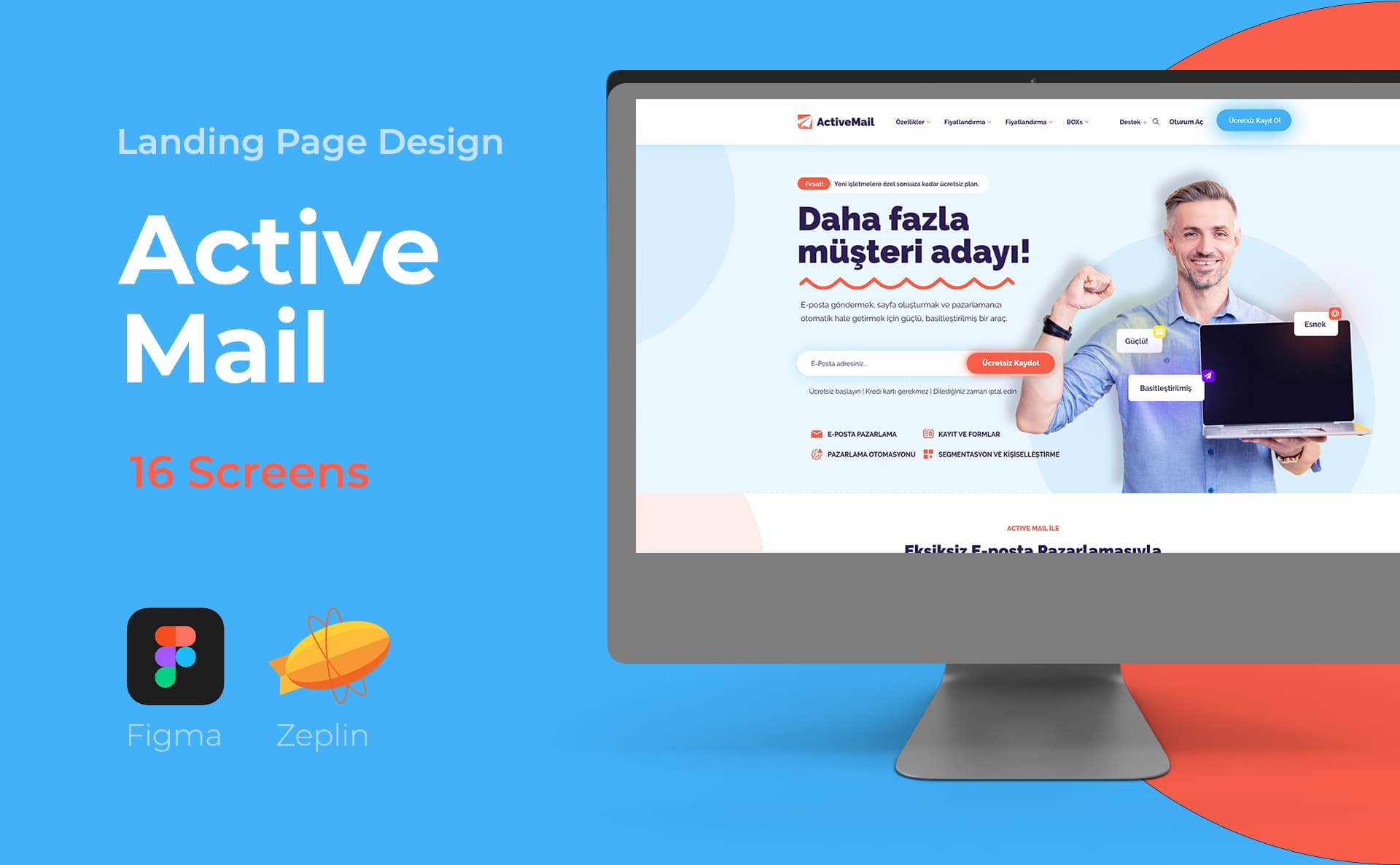
Multi-page works, such as the catalog I prepared for Pedaş, require paragraph styles, page templates and a consistent grid. Knowing the layout program is mandatory for this type of work. In screen works such as the interface design I made for Danone or Yatcim's website, component logic, screen states and delivery to the developer come to the fore. You can find the distribution of programs according to work in more detail in the graphic design programs guide.
A word of caution: Memorizing shortcuts does not make you a designer. Use the program to implement a clear decision in your mind. While learning, try each new tool with a small but real project.
How to set up a portfolio?
Portfolio is the most decisive step towards becoming a graphic designer. The employer or client looks at your work before looking at your diploma. A good portfolio does not contain too much work; explains the right things correctly.
- Choose 6 to 10 jobs. A weak job reduces the impact of strong jobs. Remove the work you are not sure about.
- Write down the problem in each job. Describe in a sentence or two who you are designing for, for what purpose, and under what constraints.
- Show the process. Sketches, eliminated aspects and final decision. Employers want to see the way you think.
- Balance diversity with focus. An identity, a multi-page spread, a piece of packaging or interface work is a good spread. Give more space to your targeted area.
- Clearly state personal work. An imaginary brief or reinterpretation of an existing brand is okay; As long as it is not presented as customer work.
- Show real use. Show the logo not only on a white background, but how it works on the packaging, on the sign, on the screen.
- Keep the presentation simple. A personal website, Behance profile, or a neat PDF is sufficient.
During my student years, I explained the relationship between portfolio and internship in the student portfolio and internship article. How you describe your portfolio in the interview is as important as the job itself.
Internship, first job and first year as a junior
The places where graphic designers work are quite diverse: advertising and digital agencies, in-house design teams of brands, publishing houses, printing houses, e-commerce companies and software companies. Each teaches something different. Working in a printing house or in a pre-press team rapidly improves production knowledge. Agency environment provides speed, campaign logic and presentation skills. In-house teams teach you how to manage a brand consistently for a long time.
The following points make a difference in first applications:
- Examine the jobs of the place you are applying to and highlight the relevant jobs in your portfolio.
- Prepare for the interview in a way that you can explain each project in the order of "problem, approach, result" in a few minutes.
- Show that your files are organized. A clean source file with named layers is often more than just a presentation.
The attitude that will add the most value in your first year as a junior is being open to learning. View revision as part of the job, not as a personal criticism. Review senior designers' files, ask why they are set up the way they are. If you are wondering how the title and seniority levels work during this period, you can look at the graphic designer, art director and creative seniority guide.
Freelance or agency?
It is possible to work freelance as soon as you graduate, but I don't think it's the easiest path for most people. Working in a team; It teaches you to take briefs, comply with the schedule, prepare files for printing and talk to the customer with lower risk. In freelance work, you manage all these on your own, plus pricing, contract and collection.
My own experience and observation is as follows: Someone who has worked in a team for several years and is confident in both design and process aspects is more likely to transition into freelance work. However, everyone's situation is different. I explained the details of this decision in the becoming a freelance graphic designer guide.
How long does it take to become a graphic designer?
It would not be right to give an exact duration, because the starting point, the frequency of work and the feedback you receive vary greatly from person to person. Here is a general framework based on my observations:
- The basis of a program: With regular practice, it becomes comfortable to use within a few months.
- A portfolio that can be shown to the employer: For someone starting from scratch, it usually requires close to a year of planned and feedback work.
- Being a designer who can make independent decisions: It requires several years in the field, different types of work and real customer experience.
School time is not added to this calendar; You can also create a portfolio while studying. The important thing is to produce work that is close to real problems over time and learn from your mistakes.
Being a graphic designer in the age of artificial intelligence
AI tools speed up image production, variation testing, text drafting, and some repetitive tasks. This is both an opportunity and a warning for anyone new to the profession. Producing visuals quickly is no longer a distinctive skill. What is distinctive; identifying the problem, selecting and correcting printouts, maintaining brand consistency, preparing the right files for print and screen, and paying attention to usage rights.
My suggestion is that you learn these tools, but do not build your portfolio on unedited outputs. If you used artificial intelligence in a project, clearly state this and your contribution. Use these tools to quickly test your ideas during the learning process; Make the decision and final correction yourself.
Summary: roadmap to becoming a graphic designer
- Choose the educational path that suits you: bachelor's degree, associate degree, course or planned self-study.
- Learn the basics such as typography, grid, color and hierarchy before or with the program.
- Start with Illustrator and Photoshop and move on to InDesign and Figma; Add After Effects as needed.
- Turn everything you learn into a small but real project.
- Find an environment where you can get regular feedback.
- Prepare a portfolio of 6 to 10 works, showing the process.
- Gain experience within a team through an internship or junior position.
- Evaluate the freelance decision after your process and customer management skills are established.
Frequently asked questions
Is university required to become a graphic designer?
No, there is no legal or general obligation. Most employers look at your portfolio first and how you think about the job. However, some corporate positions and public postings may require a diploma; Check the conditions of your targeted job.
Can one study graphic design without taking the aptitude test?
Some visual communication design and associate degree programs may accept students with central exam scores. A significant part of the programs in fine arts faculties apply special talent exams. Since conditions may change every year, it is necessary to check the ÖSYM guide and the university's current announcement.
At what age is considered too late to start graphic design?
There is no specific age limit in this profession. Those coming from another profession can use their previous experience as industry knowledge. The important thing is to establish a plan where you can work regularly and produce demonstrable work.
Can someone with poor drawing skills become a graphic designer?
Maybe. Most identity, publication, interface and typography-intensive work does not require advanced drawing. Sketching skills make your job easier and improve with practice as you can quickly put the idea on paper.
Which is better, graphic design course or department?
The two meet different needs. The chapter provides the theoretical basis and a long-term critique environment; The course teaches you a certain skill in a shorter time. When making your decision, consider your budget, time and your target job together.
How many jobs should be in the portfolio?
Generally, 6 to 10 strong jobs are sufficient. It is important to clearly explain the problem, process and result of each job rather than the number. It is often a better choice to remove something you are not sure about rather than adding it.
How long does it take to find your first job?
This period varies depending on the strength of your portfolio, the city you are applying to and the situation in the industry. A prepared portfolio, targeted applications and internship experience can shorten the process. It is not possible to give an exact time.
Can a self-learner get a job at an agency?
Yes, there are many self-taught designers in the field. For this, it is necessary to receive regular feedback, know the basic concepts and be able to explain your work with justification. Clearly stating personal work in your portfolio also builds trust.
Do you have a design project?
This guide provides information about education and profession. You can share your existing content and delivery expectations for your design project.
- Communication purpose of the project
- Mediums to be used
- Needed deliveries