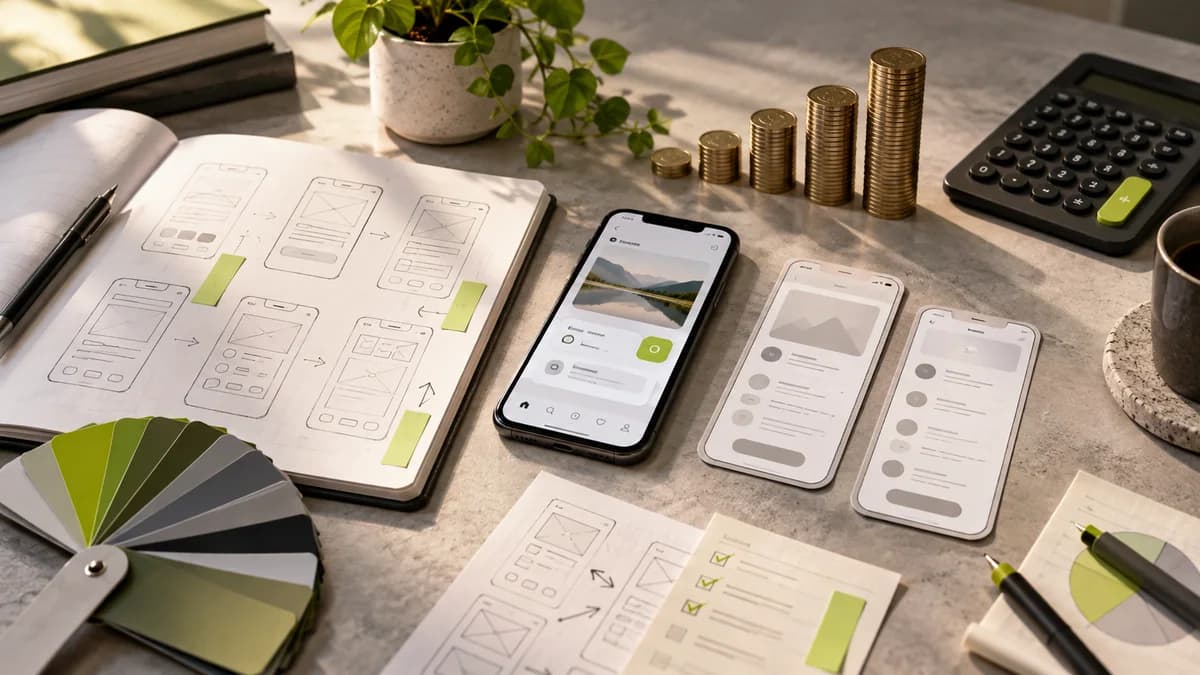
Mobile application development process; It requires product decisions, UI/UX design, software, testing and release preparation to be planned together. Completing the design file does not mean that the working product is ready. When the customer and the developer can read the same delivery plan, the scope becomes clearer.
1. Define the idea as a user task
Instead of “I want a booking app,” write what service the user will book and under what conditions. Consider the duties of the business employee and the manager separately. Noting features that will not be included in the first version of the product makes future additions more visible. MVP coverage guide can be used to get started.
2. Test critical flow with prototype
After preparing the user flow and screen sketches, try the prototype through a realistic task. Instead of telling the participant where the button is, watch them find the action themselves. Do not try to explain the stuck point with just questions of taste. Record findings and design decisions together.
3. Generate the interface with its states
Prepare empty data, error, loading, permission denied and long content statuses as well as successful transaction screens. Explain under what conditions the components change. For example, when a date is up, instead of just changing the color, make it clear that it cannot be selected and what the alternative is. The developer shouldn't have to guess these rules.
4. Don't postpone technical decisions until the design is finished
Platform, API and device features should be evaluated early. Technology selection guide provides questions for this conversation. Designer and software developer; together can discuss which behaviors will be implemented with the standard component and which with custom development. Technical feasibility and development estimation are the responsibility of the relevant team.
5. Perform testing and acceptance through tasks
Try the main scenarios on real devices. Is the action button accessible when the keyboard is open? Is information lost when the session ends? When the registration is completed, do both the user and the administrator see the same result? Design implementation control and technical testing complement each other; One does not replace the other.
6. Define store preparation as a separate delivery
Application name, description, screenshots, support information and necessary accounts should be included in the release plan. Current store requirements are checked before shipping. For example, Apple review rules describes the topics that affect the evaluation of the application. Preparation does not guarantee approval or a specific release date.
How should duration, budget and maintenance be discussed?
The number of screens alone does not determine the duration. User roles, custom interactions, integrations, and the feedback process impact the schedule. Determine the stages, responsibilities and acceptance criteria instead of giving an exact duration or market price without the scope of the project. Mobile interface price guide explains which works constitute the design cost.
Post-release bug fixing, operating system adaptations, and new feature development should be planned separately. With Selçuk Aker, you can share your project to clarify user flows, interface system and decisions to be transferred to the developer within the scope of mobile application design.
Frequently asked questions
Should we move immediately from the mobile application idea to screen design?
The target user and core task must be clear first. Prototyping critical uncertainties strengthens decisions prior to detailed interface production.
Can the Figma prototype be uploaded to the app store?
No. Prototype describes design behavior. The working application also needs to be developed, tested and go through the relevant release process.
How long does it take to develop a mobile application?
It depends on the scope. Design, development, integration, testing and release preparation should be estimated separately; customer feedback and external dependencies should be factored into the plan.