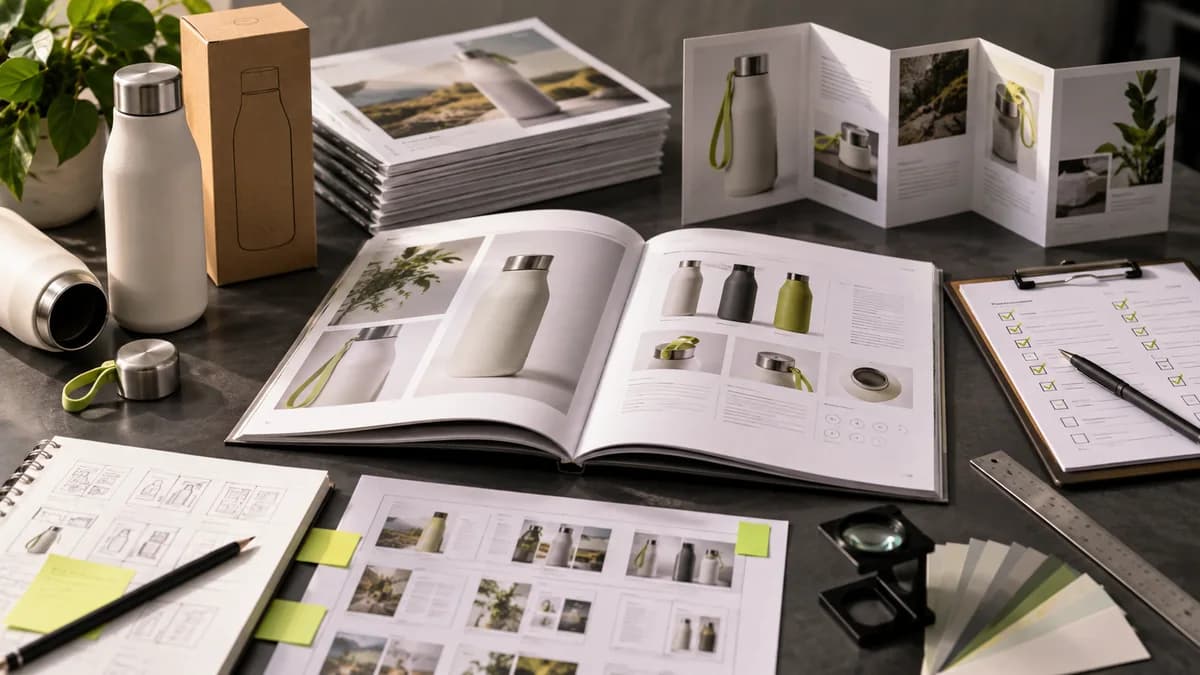
Someone looking for catalog design with artificial intelligence usually wants a fast page layout. However, the main responsibility of the product catalog is to consistently present information that will help the customer choose the right product. A product detail that doesn't actually exist or a mismatched specification can destroy the value of a seemingly successful page.
Identify the source of product information
Product name, code, size and description must come from an approved list. Do not use details estimated by the visual production tool as product information. Check which photo matches which code, especially on similar models. Changing the leg or fabric of a chair in the drawing also changes the product promise that the customer sees.
Design a page system, not a page
The layout that looks good on the first page may be disrupted in products with long descriptions. Experiment with the shortest and longest content. The title, price, if any, feature field and location of the image should be consistent across pages. Consistency is not about forcing every page to look the same; The reader can predict where to find information.
Are the brochure and the catalog the same scope?
No. A short promotional brochure can highlight a single message. A catalog, on the other hand, may require product groups, comparisons and a broader navigation layout. Start by asking “how many pages?” Instead of starting with the question, determine what information will be told, in what order and for whom. Also consider how added products will affect the layout.
Student exercise: embed difficult content
Write the texts yourself for six imaginary products. Let one's name be too long, one's photo be vertical, and the other's feature list is more crowded. Try to place them all in a readable format with the same design system. However, a model prepared with ideal content may not show real production problems.
Make two separate checks before delivery
At the first check, the content owner must approve the product information. In the second, let the graphic designer control the page flow, image quality, numbering and printing conditions requested by the manufacturer. The requirements of the PDF used on screen and the print file may differ. Say the media to be used at the beginning.
Add your sample product list and existing images to the brief for catalog design or brochure design. Don't determine the exact scope of delivery based solely on the AI mockup.
For an overview, you can refer to the beginner's guide on designing with artificial intelligence.
Frequently asked questions
Who should verify product data when preparing a catalog with artificial intelligence?
Product name, code, size and technical information must come from the authorized source of the brand. Separate design control from data validation; Do not use a manufactured description as verified product information.
Can the sample catalog page prepared with AI be applied to all products?
The sample page is just the beginning. Test the template with products with long product names, different photo ratios and intense technical information; Prepare multiple page layouts when necessary.